Computer models of the Greenland Ice Sheet are an important tool for researchers investigating how the ice will respond to future climate conditions and to what extent it may contribute to rising sea levels.
However, the models face a challenge. The Greenland Ice Sheet responds to climate change over long timescales, whilst direct observations of the ice’s movements only go back a few decades. Satellite measurements of the ice’s movement and thickness date from the late 1980s, but a few decades’ worth of observations is a short time when the models are to be used for calculations spanning centuries.
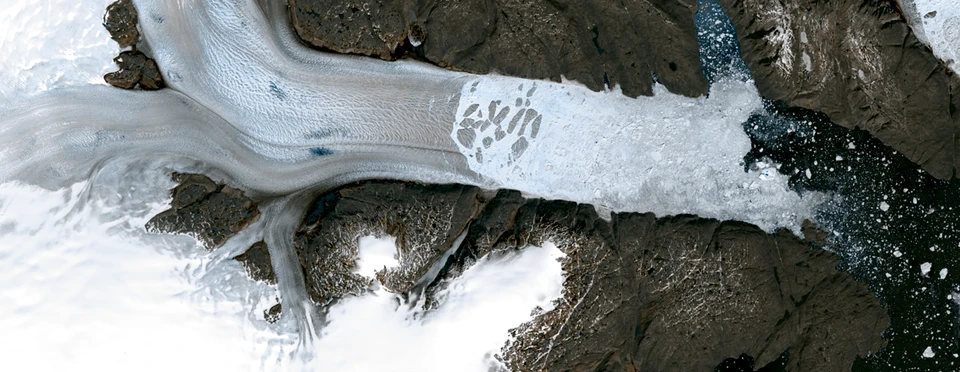
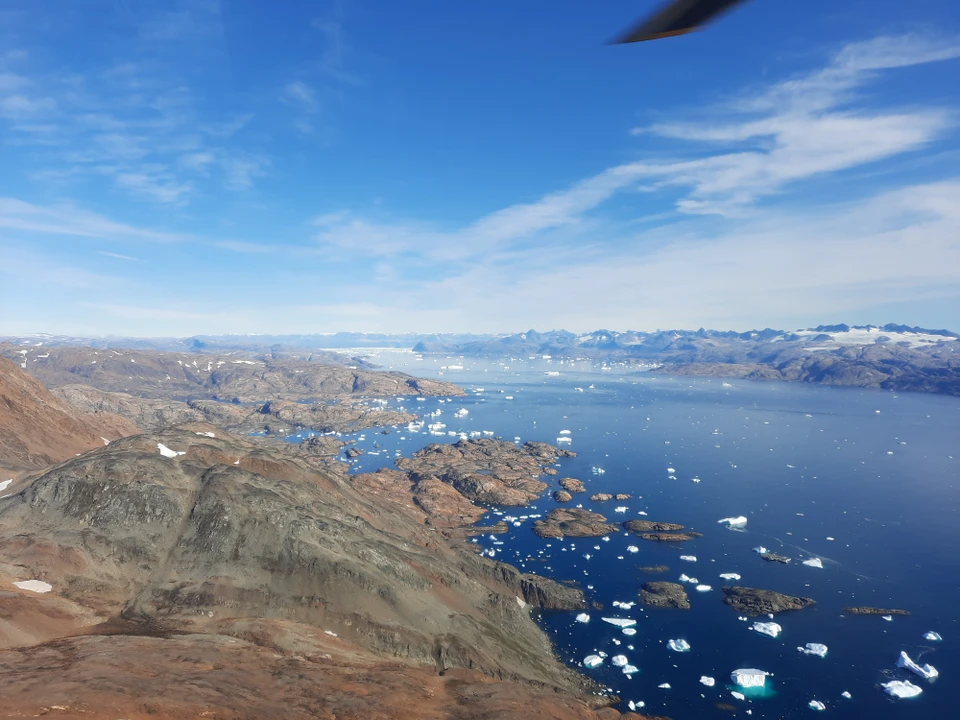
Now, researchers from the Geological Survey of Denmark and Greenland (GEUS) have found a way to expand the historical basis against which the models can be tested. For the first time, they have used traces of icebergs on the seabed to investigate how well a model can reproduce changes in a glacier dating back more than 100 years. Specifically, the researchers have used sediment cores from Sermilik Fjord in East Greenland to test the model against changes in the Helheim Glacier over the past 127 years.
“If we are to use models to make predictions about the future, it is important to know whether they can also reproduce the changes we know have occurred in the past. The problem is that our direct observations cover only a small part of the timescale in which the Greenland Ice Sheet reacts,” says Signe Hillerup Larsen, a researcher at GEUS and lead author of the study.