
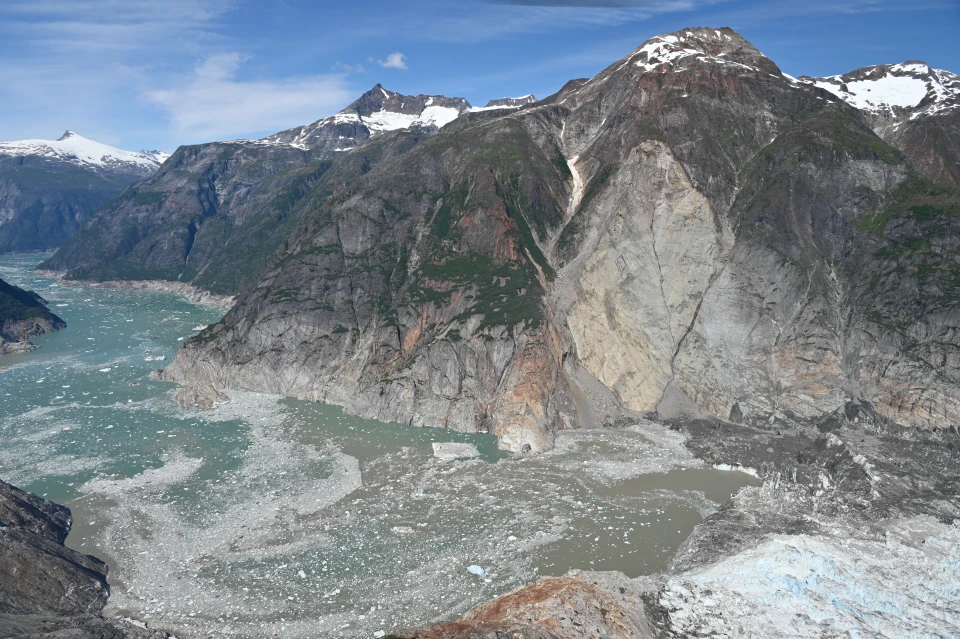
On 10 August 2025, a massive landslide occurred in Tracy Arm Fjord in Alaska, triggering a mega-tsunami. Scientists estimate that at least 63.5 million cubic metres – that is 63,500,000 m³ – of material slid into the fjord during the landslide. That is enough material to fill approximately 25,000 Olympic-sized swimming pools – or 26 times the volume of the Great Pyramid of Giza. The landslide generated a very high tsunami. Traces of the tsunami can be seen 481 metres above sea level on a cliff face 1.6 km away from where the landslide struck the fjord. The tsunami thus ranks second among the highest tsunamis ever observed.
The material originated from an area measuring 1,000 x 600 metres, 1,000 metres above sea level.
“This was a massive landslide from a great height, and combined with the shape of the fjord, it created the conditions for the massive tsunami and a subsequent seiche,” explains Kristian Svennevig, a senior researcher at the Geological Survey of Denmark and Greenland (GEUS) and Denmark’s leading expert on landslides. A seiche is a phenomenon where the water sloshes back and forth in the fjord, creating a seismic signal that can be measured by seismometers around the world.
Kristian Svennevig is among the researchers who have just published a research article on the event in Science. Dan H. Shugar from the University of Calgary in Canada is the lead author of the article.
Landslides occur regularly in Alaska’s fjords, which are characterised by steep mountains and glaciers. Kristian Svennevig explains that there are several factors that make this landslide particularly interesting:
“Apart from the massive volume of material, the record-breaking tsunami is, of course, exceptional. Furthermore, the fjord is a popular destination for cruise tourism, which underlines the need for us to understand these phenomena, even though they occur in remote Arctic fjords. And then, of course, this is only the second time we have recorded a seiche triggered by a landslide,” says Kristian Svennevig.


