
How does sea-level respond when the climate warms and icesheets disappear? Instinctively, one would think that the sea-level rises as more water is added from melting ice sheets to the ocean. While this is true for global scale sea-level, the opposite can be the case at local scale in the areas close to retreating or disappearing ice sheets.
This conundrum is at the heart of a new study that reconstructs sea-level changes in southern Greenland over the past ~10,000 years. The results reveal rapid sea-level fall after deglaciation and suggest much lower relative sea-levels during a time in the past when it was warmer than it is today. Moreover, the study indicates that commonly used climate models may underestimate how dynamic the response of local sea-level change is to a warming climate.
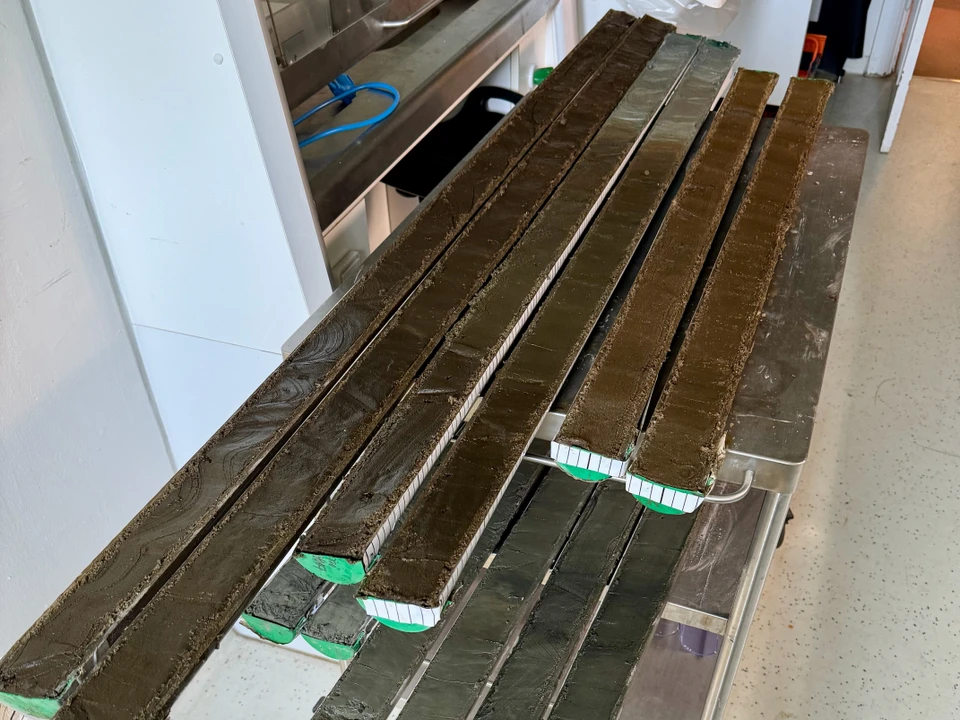
The study is based on analyses of sediment cores from lakes and submerged basins in the inner part of Isortoq Fjord in southern Greenland. The sediment layers act as a geological archive, recording when basins were isolated from the sea – and later inundated again.
“The sediments give us a uniquely detailed insight into how the landscape responded as the ice retreated. They provide a rare opportunity to reconstruct past sea levels with a high degree of precision,” says Gregor Luetzenburg, postdoctoral researcher at the Geological Survey of Denmark and Greenland (GEUS) and lead author of the study.