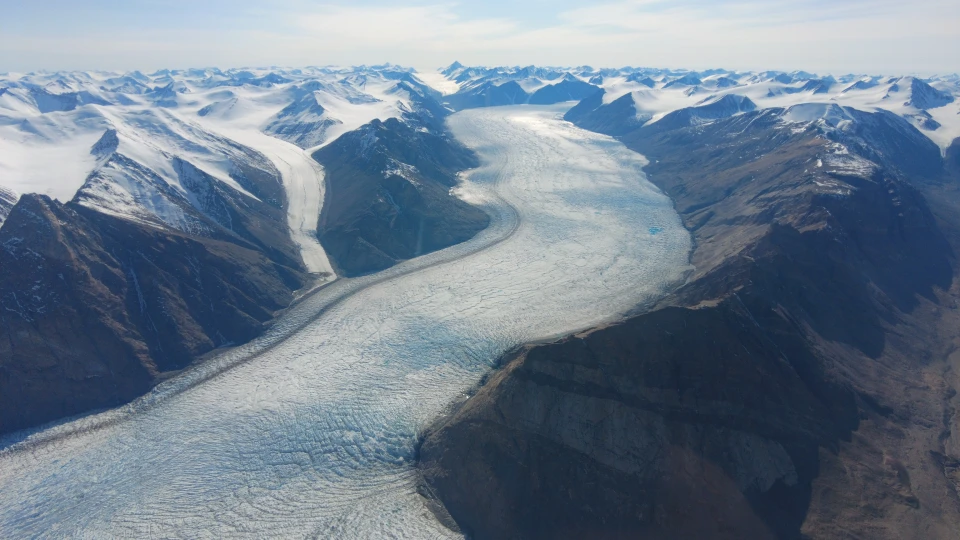
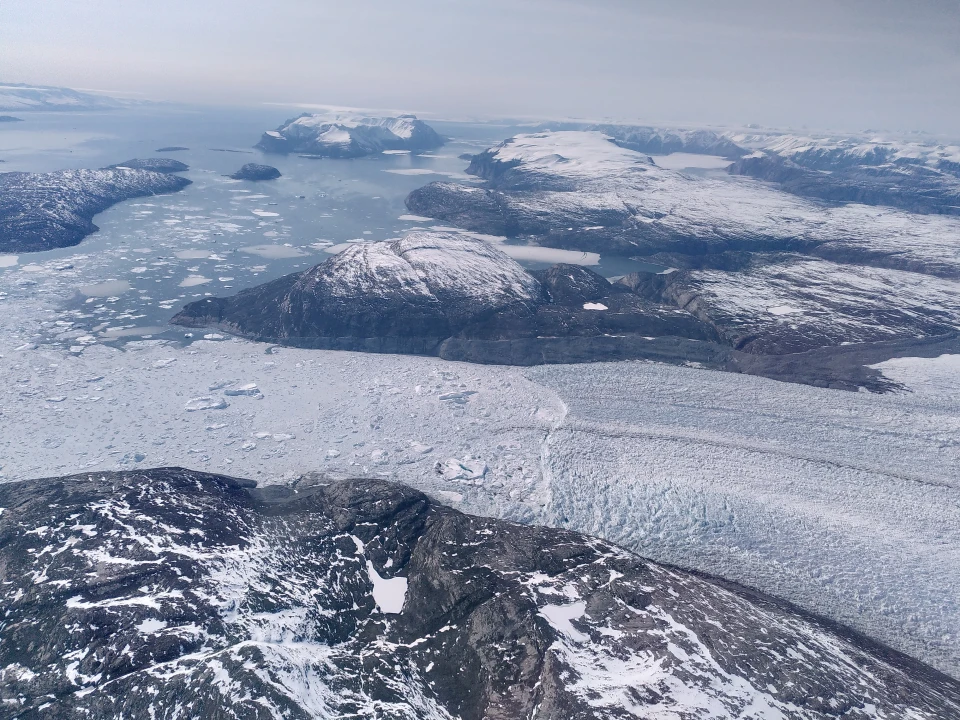
Covered by hundreds to thousands of metres of ice, observations of this “subglacial system” are extremely rare, and many of our current assumptions about Greenland's subglacial system are based on observations from glaciers in the Alps. But comparing the thin, warm, and slow Alpine glaciers to the thick, cold, and fast glaciers in Greenland may be like comparing apples and oranges. This is a problem for the accuracy of the models that are used when estimating future sea-level rise and other climate-change effects.
“There is no doubt that the lack of observations limits our ability to describe the subglacial system in Greenland – a system that is key to how glaciers behave in a changing climate,” says Professor Nanna B. Karlsson, the Geological Survey of Denmark and Greenland (GEUS).
Nanna B. Karlsson’s new project REGLA aims to investigate how and why subglacial conditions determine glaciers’ responses to surface melt: some glaciers accelerate as surface melt increases, while others decelerate.
“We are going to use satellite observations, machine learning, mathematical models and drone measurements to study the occurrence of subglacial meltwater. At the same time, a seismic truck will investigate the geology under the Greenland Ice Sheet,” says Professor Nanna B. Karlsson.
With the new data and observations, REGLA will construct better descriptions of Greenland’s subglacial system and improve predictions of how glacier flow will respond to future climate change.