Carving out a glimpse of the future from ancient ocean mud

Published 09-01-2026

A new grant enables Professor Sofia Ribeiro and her team to create an archive of past Arctic Marine adaptations to climate change, bridging the knowledge gap between observations and the unobservable past. Project POLARIS will improve predictions of Arctic marine productivity and inform global climate and ocean policies.

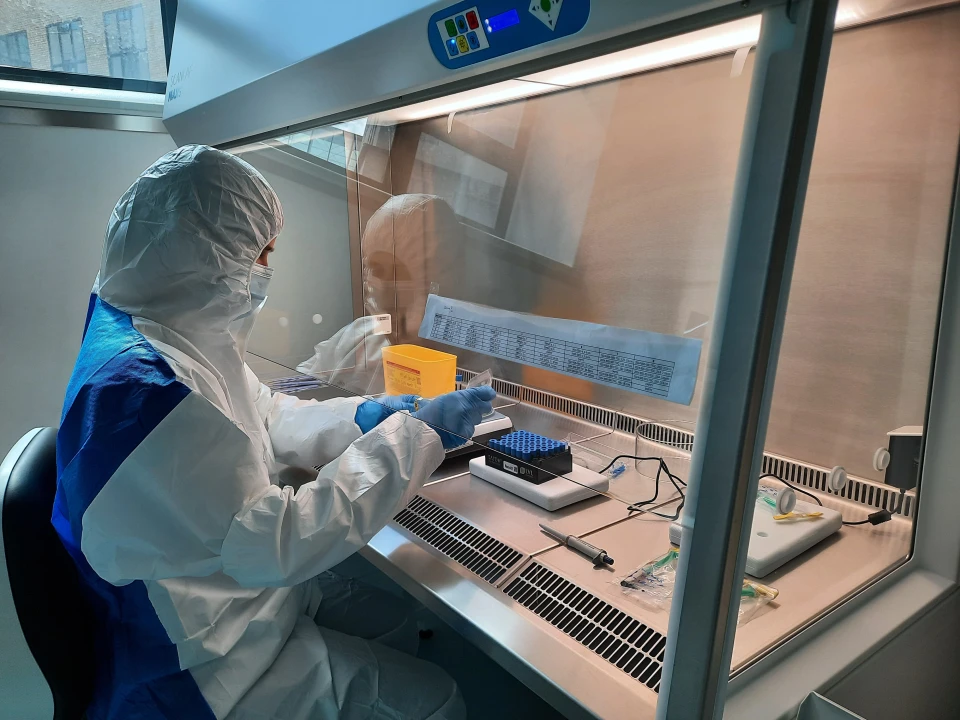
Clara Andersen working in the sedimentary ancient DNA lab at GEUS. (Heike Zimmermann, GEUS)

Professor Sofia Ribeiro, the National Geological Survey of Denmark and Greenland, has received a Carlsberg Foundation Semper Ardens: Accomplish grant for her project POLARIS – ‘Probing the future of Arctic Marine Productivity from the Seabed’.

“The aim of project POLARIS is to uncover how Arctic marine producers respond to a changing climate” says Professor Sofia Ribeiro.

If we want better predictions of future effects of climate change, we can rely on the largest natural archive on the planet: marine sediments. The Arctic is a clear first mover of how the effect of a warming climate unfolds. In present day, the Arctic marine environment is changing at a pace unprecedented in the history of human civilization. But is it not the first time in the history of life that Arctic marine ecosystems have had to adjust to a fast-changing climate, and there is a lot to learn by digging into marine sediment archives which contain traces of past ecosystems. Knowledge that can inform our current efforts to predict the future effects of climate change.

The project will use novel methods, including sedimentary ancient DNA, to create an archive of past climate responses in Arctic marine primary producers and predict future trajectories with Earth System and ecological modelling. This enables researchers to get a glimpse of the evolutionary processes the microscopic life of the Arctic oceans has been through and link them to climate changes.
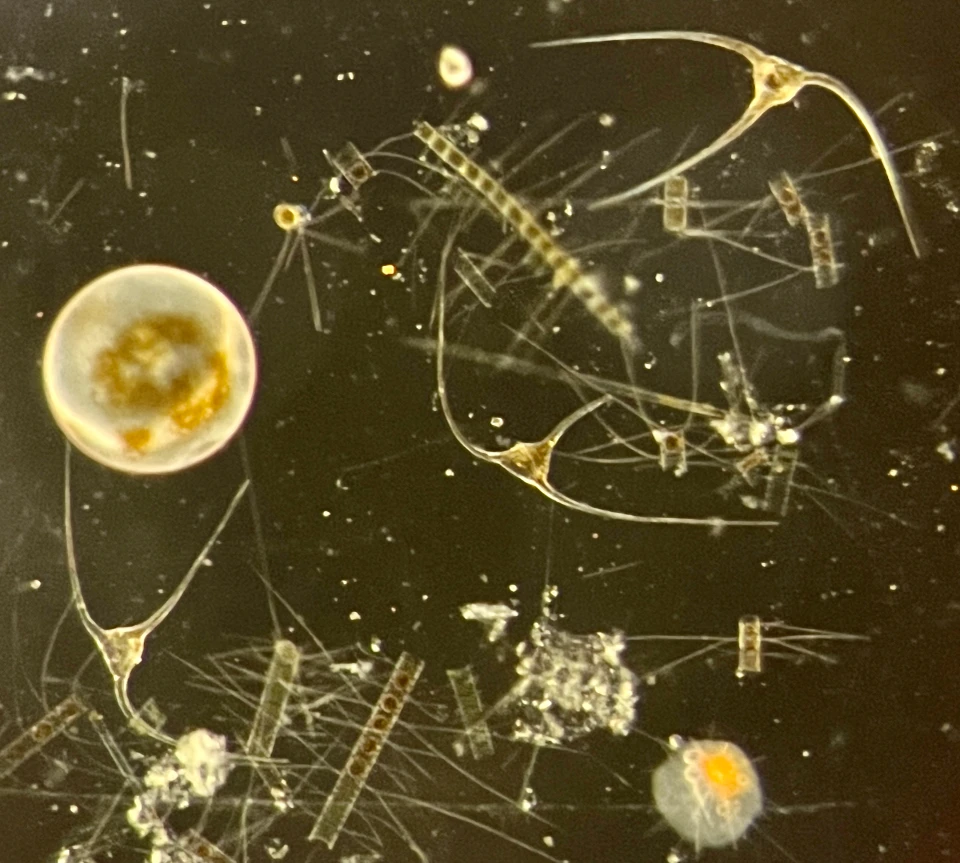
Arctic phytoplankton. (Sofia Ribeiro, GEUS).

Tiny but mighty: the ocean microbes that feed marine ecosystems and buffer climate change

In project POLARIS, Professor Sofia Ribeiro and her team will unlock both living, molecular, and fossil archives of Arctic phytoplankton. Central to the changes in the Arctic is marine productivity – the rate at which organic matter is produced – by mostly microscopic photosynthetic organisms such as phytoplankton and sea ice microalgae. These chloroplast-bearing microbes are part of the global ocean microbiome, and responsible for sequestering carbon away from the atmosphere, producing oxygen through photosynthesis, and forming the basis of marine food webs.

“We will combine resurrection ecology, micropaleontology, and sedimentary ancient DNA and are aiming at going back 1 million years,” says Professor Sofia Ribeiro.

Many primary producers form resting stages such as cysts or spores during their life cycle that accumulate in marine sediments. In project POLARIS, the team will isolate and revive resting stages from different core age-depth layers to obtain a living library and time-series of resurrected strains – a living archive of the past.

The team will also further develop known methods for investigating proxies for climate change, such as high-throughput imaging analyses of phytoplankton microfossils. One of the things the researchers look at is size, as phytoplankton size partly controls whether carbon is recycled near the surface or exported into the deep ocean, affecting the strength of the biological carbon pump.

A range of core records of marine sediments that cover past warming periods (so-called interglacials) have been selected for sampling in the project. Some of the cores selected are from the International Discovery Programme (IODP) Expedition 400 to Northwest Greenland and here the goal is to target several past warm periods. This includes interglacials such as the Eemian (when temperatures resembled those projected for our not-so-distant future in 2050–2100) and MIS11 (ca. 400 thousand years ago), when southern Greenland was ice-free and covered by a boreal forest.

”This project builds on many years of fieldwork and method development, and I am truly excited about what we might discover, and also having the opportunity to work with the project team and our excellent collaborators over five years,” says Professor Sofia Ribeiro.

Project POLARIS will start in May 2026 and run for five years.

About POLARIS

Project lead: Sofia Ribeiro, Professor.

Funding: Carlsberg Foundation Semper Ardens: Accomplish grant CF25-1636, DKK 12,725,669.

Run time: May 2026-April 2031.

Read more about the grant at carlsbergfondet.dk

Professor Sofia Ribeiro is the project lead of POLARIS.

Climate modelling and paleoclimatology

When we create future climate models, we feed the models with knowledge of past climate, and how it has changed over time. The reliability of the results depends on the quality and accuracy of the input. Researchers include a vast variety of parameters in the models, some of which are based on very accurate measurements thanks to modern technology, and some which are the most qualified guesses we can come up with based on current knowledge. Some things leave little or no traces for us to estimate their occurrence by – like sea ice. However, indicators like the ancient microbe DNA mentioned in this news item can act like proxies and enable us to inform our modelling with the next best thing to direct measurements. Paleoclimatology, the science of studying past climate, relies on such proxy methods. It is based on those that we know how air and ocean temperatures, salinity, sea-level and CO2 concentrations evolved for millions of years of Earth’s history, way before there were any humans to tell the story.

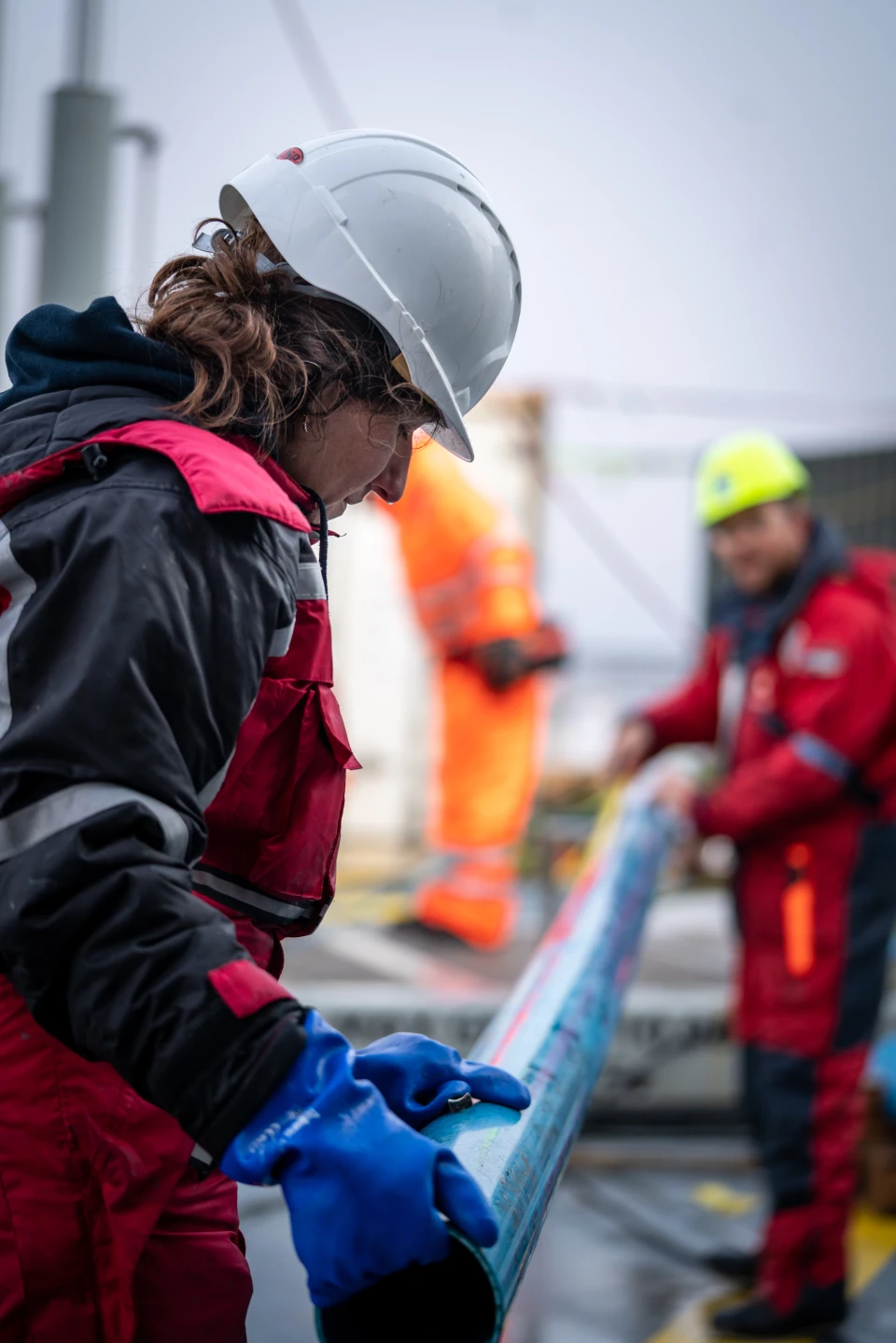
Sofia Ribeiro collecting marine sediment cores from NW Greenland with C. Pearce. (Frederik Teglhus, Underground Channel)

Other news related to Greenland and the Arctic

Sofia Ribeiro
Professor
Glaciology and Climate
Malene David Jensen-Juul
Special Consultant
Press and Communication