Is the ice melting less?
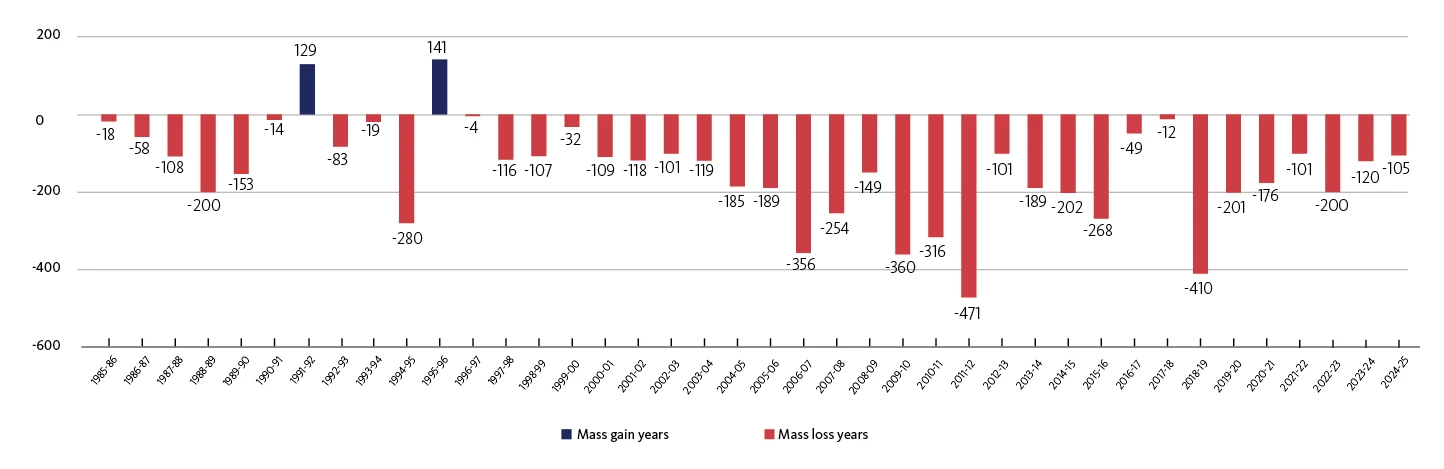
To the untrained eye, a graph of all the so-called melt years (running from September 1st to August 31st) may give the impression that the ice is melting less and less. In the past five or six years, the amount of ice that has disappeared has become lower and lower – from more than 400 billion tonnes in 2019 to approximately 100 billion tonnes this year. But unfortunately, that is not the case, says Signe Hillerup Larsen.
“It is most likely due to variations in the weather. In the 2010s, there were some years with extreme ice loss, which make the following years look less severe. But no matter what, the numbers from all the years still show the same: that the ice is shrinking. Whether it is a lot or just a little.”
30 years of ice loss next year
The overview of the annual ‘accounts’ of the Greenland Ice Sheet shows that it is now the 29th year in a row that the Greenland Ice Sheet has lost ice to the surrounding oceans. This means that for 29 years in a row, the ice sheet has lost more ice in the summer than can be replaced by snowfall the rest of the year. If that also happens next year, it will be 30 years in a row. This means that an entire generation has only experienced a decreasing Greenland Ice Sheet. And this is very likely to happen, estimates Signe Hillerup Larsen.
In climate research, 30 years is a bit of a magic number, because after a 30-year period, you can no longer say that the constant melting is due to coincidences. It is a real trend. A kind of new normal.
“This is happening because it is getting warmer in the Arctic generally, and there is no indication that this will change any time soon. Therefore, we expect the ice to continue melting even though some years might be worse than others, “ she says.
Relatively cold summer
There were times this year when Signe Hillerup Larsen and her colleagues held their breath, because it seemed like it would be another record melting year. This was because very little snow fell on the Greenland Ice Sheet during the winter, which meant that the ice wouldn’t be very resilient when summer set in.
However, it started to snow more from around February, says the climate researcher. When summer set in along with the melt season in June, there was a period of severe melting to a degree that had not been seen since the record year of 2012. Fortunately, it started to snow heavily on the ice sheet in July and August, and the snow slowed down the melting once again.
So now that summer is over, it ended up being a relatively mild year, yet still a year of loss.